



Written By Virtuosity Editor Team
Updated 7 January 2026
In today’s world of technology, Digital marketing is helping businesses to reach people where they spend most of their time—online. It is not just about selling products but building trust, sharing useful information, and creating meaningful connections. A strong digital strategy makes it easier for customers to discover and engage with your brand. Without it, even great products can go unnoticed.
To implement this, marketers often utilize a framework known as the 7 Cs of Digital Marketing. The 7 Cs are seven key principles that guide businesses in creating effective online marketing strategies. Each “C” focuses on a different part of marketing, from understanding your customers to turning engagement into action. Following these principles helps brands communicate better, build loyalty, and get real results.
In this blog, we will explain each of the 7 C’s in simple terms. You’ll learn what they mean, why they are important, and how to apply them in your marketing. You’ll also know how to connect with your audience, share valuable content, and grow your business online:
The following are the 7 key Cs that every digital marketer should know:
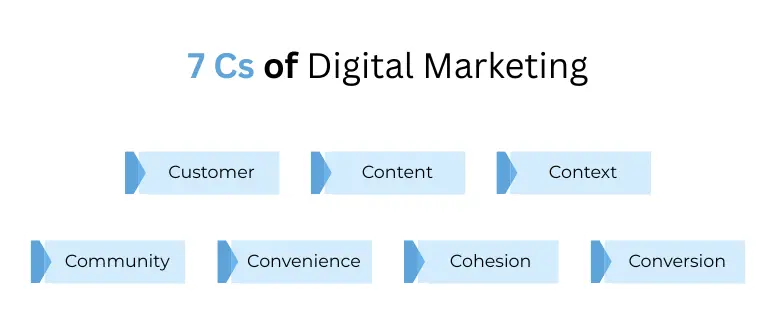
The 7 Cs of Digital Marketing start with Customer to help you understand your audience and meet their needs. Knowing who your customers are, what they need, and how they behave online allows brands to create messages that feel personal, relevant, and timely. A customer-focused approach builds trust, encourages interaction, and enables long-term loyalty, ultimately driving business growth.
How to understand your audience:
Content is what connects your brand with your audience. It includes blogs, videos, social media posts, emails, and guides. High-quality content educates, solves problems, or provides value instead of just promoting products. Consistently relevant content improves interaction, builds trust, and strengthens your brand presence across all digital channels.
Key ways to create effective content:
Context is about delivering content that matches user intent, platform, and timing. The same message doesn’t work everywhere—professional content performs better on LinkedIn, while short visuals work best on Instagram. Understanding context ensures your messages are relevant, timely, and engaging, helping you capture attention and build stronger connections with your audience.
How to leverage context effectively:
Community is about creating a group of engaged users who actively interact with your brand. Social media, forums, and online groups allow direct connections, fostering trust and loyalty. A strong community encourages feedback, discussion, and collaboration, helping your brand become more relatable and turning followers into long-term advocates.
How to build a strong community:
In the 7 Cs of Digital Marketing, Convenienceensures a smooth, friction-free user experience. Users should find information quickly, navigate easily, and complete actions without frustration. Simplifying interactions not only improves satisfaction but also increases interaction, encourages repeat visits, and boosts the likelihood of conversions across all digital touchpoints.
How to enhance user convenience:
Cohesion is about delivering a unified brand experience across all digital channels, including your website, social media, emails, and ads. Consistent messaging, visuals, and tone build recognition, strengthen credibility, and make your brand more memorable. A cohesive approach ensures users trust your brand and clearly understand your value proposition.
Benefits of cohesion:
Conversion is the ultimate goal of digital marketing—turning visitors into leads or customers. It includes purchases, sign-ups, downloads, or inquiries. Optimizing for conversion ensures that your marketing efforts deliver measurable results and maximize ROI, turning engagement into meaningful business outcomes.
How to turn conversions into clients:
| 7 Cs | What It Means | Key Action |
|---|---|---|
| Customer | Know your audience and their needs | Create detailed personas, track behavior |
| Content | Valuable content that connects | Use clear language, mix formats, and stay relevant |
| Context | Right message at the right time | Personalize content, adapt to platform |
| Community | Build engagement and loyalty | Encourage discussion, share user content |
| Convenience | Make interactions smooth and easy | Mobile-friendly design, fast pages, simple forms |
| Cohesion | Consistent brand experience | Use the same tone, visuals, and messaging |
| Conversion | Turn engagement into action | Clear CTAs, simple forms, track & optimize |
Ready to transform your digital marketing strategy? Now that you understand the 7 Cs, it’s time to put them into practice. At our digital marketing company in Jalandhar, we specialize in helping businesses master these principles to drive real growth. Our team works with you to create campaigns that reach the right audience, share the right message, and get real results. We make digital marketing easy to understand and apply, helping your business grow online. With the right strategies and continuous support, Virtuosity Digital ensures your brand stands out, connects with customers, and achieves measurable success.
Understanding the 7 Cs of digital marketing can help you unlock the full potential of your digital marketing campaign. Customer, Content, Context, Community, Convenience, Cohesion, and Conversion. These principles are essential for creating campaigns that connect, engage, and drive results. Whether you’re starting or looking to sharpen your skills, knowing how to apply these strategies can make all the difference.