



What Is Shopify Development? A Complete Beginner’s Guide
Written By Virtuosity Editor Team
Updated 23 October 2026
Shopify has become a popular platform for businesses looking to build and manage their online stores. Its user-friendly platform makes it easier to get started, but creating a store that truly stands out often requires more than choosing a theme and adding products. Businesses may need custom features, unique storefront designs, third-party integrations, performance improvements, and ongoing technical support to meet their specific goals.
This is where Shopify development comes in. Whether you are launching your first online store or looking to expand an existing one, understanding Shopify development can help you make informed decisions about your e-commerce strategy. In this beginner’s guide, we will explore what Shopify development means, the services it includes, how the development process works , and when your business may need it.
What Is Shopify Development?
Shopify development is the process of building, customizing, and optimizing an online store on the Shopify platform to meet a business’s specific needs. While Shopify provides ready-made themes and built-in tools to help businesses launch their stores, development allows them to create customized designs, add advanced functionality, and improve the overall shopping experience.
Shopify store setup and Shopify development are two different processes, although they are often used together.
-
Shopify store setup focuses on preparing an online store for launch. This includes creating the store, selecting a theme, adding products, configuring payments and shipping settings, and connecting a domain.
-
Shopify development focuses on customizing or extending the store to meet specific business requirements. This may involve custom coding, theme development, app development, API integrations, or features beyond the standard setup options.
6 Most Common Types of Shopify Development
Shopify development includes a wide range of services that help businesses build, customize, and improve their online stores. Some businesses may only need theme customization, while others may require custom apps, third-party integrations, platform migration, or ongoing technical support.
Here are six common types of Shopify development types to consider based on your store’s requirements and business goals.
1. Shopify Store Development
Shopify store development involves building and setting up a complete online store based on a business’s requirements. It includes creating the store structure, customizing pages, configuring essential features, and organizing the shopping experience to help customers browse products and complete purchases smoothly.
2. Shopify Theme Customization
Shopify theme customization involves modifying an existing theme to align with a brand’s visual identity and functionality requirements. This may include adjusting layouts, colors, typography, page sections, product pages, and navigation to create a more distinctive and user-friendly storefront without building an entirely new theme.
3. Custom Shopify Theme Development
When an existing theme cannot meet a business’s design or functionality, custom Shopify theme development offers greater flexibility. It involves building a theme specifically for the brand, allowing greater control over the store’s appearance, functionality, and customer experience
4. Shopify App Development
Shopify app development involves creating custom applications to solve specific business requirements, automate tasks, or improve store functionality. These apps can address specific business requirements, automate repetitive tasks, support unique workflows, and introduce functionality tailored to the store’s operations.
5. Shopify API Development & Integrations
Shopify integrations connect an online store with third-party platforms and tools. These can include CRM (Customer Relationship Management) systems, accounting software, inventory management tools, marketing platforms, and shipping services. Integrations help businesses coordinate their operations and reduce manual data handling.
6. Shopify Migration
Shopify migration involves transferring an existing online store from another e-commerce platform to Shopify. Depending on the project, this may include migrating product details, customer records, order history, collections, and other store data while maintaining data accuracy and minimizing disruption to business operations.
How Does Shopify Development Work?
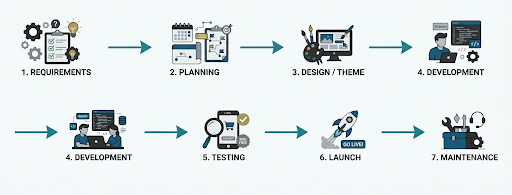
Shopify development follows a step-by-step process to turn a business idea into a fully functional online store. While the exact process can vary depending on the project, most Shopify development projects follow these 7 key stages:
1. Requirements
The process starts by understanding what the business needs from its Shopify store. This may include the desired design, features, target customers, products, integrations, performance requirements, and overall business goals. Clearly defining the requirements at this stage helps developers understand the project scope and determine the right approach for building the store.
2. Planning
Once the requirements are clear, the development team creates a plan for the project. This includes deciding which Shopify features, themes, apps, technologies, and integrations will be needed. The team may also define the project timeline, development stages, responsibilities, and technical requirements before moving forward.
3. Design/Theme
The next step is to focus on how the Shopify store will look and feel. Businesses can choose to customize an existing Shopify theme or create a custom theme based on their brand and requirements. This stage focuses on elements such as page layouts, colors, typography, navigation, product displays, and the overall customer experience.
4. Development
Once the design is finalized, developers begin building and customizing the store. This can include theme customization, custom coding, feature development, app development, and third-party integrations. The goal at this stage is to turn the planned design and functionality into a working Shopify store that meets the defined requirements.
5. Testing
Before the store goes live, it needs to be tested thoroughly. Developers check important areas such as navigation, product pages, forms, checkout, integrations, responsiveness, functionality, and performance. Testing helps identify and fix bugs or usability issues so customers can have a smooth experience when the store launches.
6. Launch
After testing is complete and the store is ready, it is prepared for launch. This may include configuring the domain, finalizing store settings, checking essential integrations, and making sure everything is working correctly. Once the final checks are completed, the Shopify store can go live and start serving customers.
7. Maintenance
Shopify development does not necessarily end after launch. Stores may require ongoing maintenance to fix issues, update features, improve performance, and adapt to changing business needs. Regular support and optimization can help keep the store secure, functional, and ready to support the business as it grows.
When Does Your Business Need Shopify Development?
A basic Shopify setup may be enough when launching a new or small online store. However, as your business grows, you may need additional customization, integrations, or functionality that standard themes and built-in features cannot fully provide.
Here are some common situations when Shopify development may be beneficial:
-
You Need a Unique Store Design: If pre-built themes do not match your brand’s look and feel, custom development can help create a more distinctive and professional storefront.
-
Your Store Is Growing: As your product catalog, customer base, and order volume increase, your store may require additional functionality, automation, and optimization to support that growth.
-
You Need Custom Features: Your business may require features that are not available through Shopify’s standard tools. A developer can build functionality specifically around your products, customers, or business processes.
-
You Want to Improve Customer Experience: Customizing navigation, product pages, search, filters, and other store elements can make it easier for customers to browse and purchase products.
-
You Need Third-Party Integrations: If your business uses CRM, accounting, inventory, marketing, shipping, or other software, Shopify development can help connect these systems with your store.
-
Your Store Has Performance Issues: Slow-loading pages, unnecessary apps, or inefficient code can affect the shopping experience. Shopify development can help identify and address technical performance issues.
-
You Are Moving to Shopify: Businesses migrating from another e-commerce platform may need development support to transfer data, recreate important functionality, and ensure the new Shopify store works as expected.
Key Benefits of Investing in Shopify Development
-
Better Brand Identity: Create a unique store design that reflects your brand and helps you stand out from competitors.
-
Improved Customer Experience: Customize store layouts, navigation, and features to make shopping easier and more engaging.
-
Custom Functionality: Add features and solutions based on your specific business requirements.
-
Easy Integration: Connect your Shopify store with CRM, inventory, marketing, payment, shipping, and other essential tools.
-
Better Store Performance: Optimize the store for faster loading times, smoother functionality, and improved usability.
-
Scalability: Build a flexible store that can adapt to changing business needs and support future growth.
-
Competitive Advantage: A well-developed Shopify store can provide a more personalized shopping experience and help your business stand out in the market.
If you're looking to build a new Shopify store or improve an existing one, explore Virtuosity Digital’s Shopify development services to find solutions tailored to your business requirements.
Conclusion
Shopify development helps businesses build a customized, functional, and scalable e-commerce experience tailored to their specific needs. From theme customization and custom development to integrations, optimization, and ongoing support, the right development approach can improve store functionality and the overall shopping experience.